Identify use before choosing care
A bamboo object may be a contemporary kitchen tool, an old storage basket, a lacquered flower container or a sculpture intended for display. Those categories do not share one cleaning routine. Even closely related forms can contain different finishes, adhesives, bindings or repairs. Start with the maker's instructions, original product information or a reliable collection record. If none is available, do less until you understand more.
Food contact deserves particular caution. A basket's appearance does not establish that its materials and coatings are suitable for food, and a decorative object should not be repurposed as a serving vessel merely because it is made of bamboo. Follow explicit intended-use guidance. For old or undocumented objects, keeping food and liquids separate is the safer choice.
Handle the whole structure, not its weakest detail
Lift an unfamiliar basket with clean, dry hands supporting the base and body. Avoid lifting by a rim, projecting strip or handle unless the maker has clearly intended and rated it for that use. Age, hidden breaks and previous repairs can reduce strength without changing the silhouette very much. When moving a fragile object, clear the route first and use a stable support rather than carrying several pieces together.
Look for snagged fibers, loose bindings, cracks near tight bends and distortion at the rim. These observations do not require flexing the object. Pressing a strip to “see whether it is still strong” can create the damage you were trying to assess. Keep rough fabric and jewelry away from delicate openwork, where a small catch may pull on a much larger area.
Dusting should not become abrasion
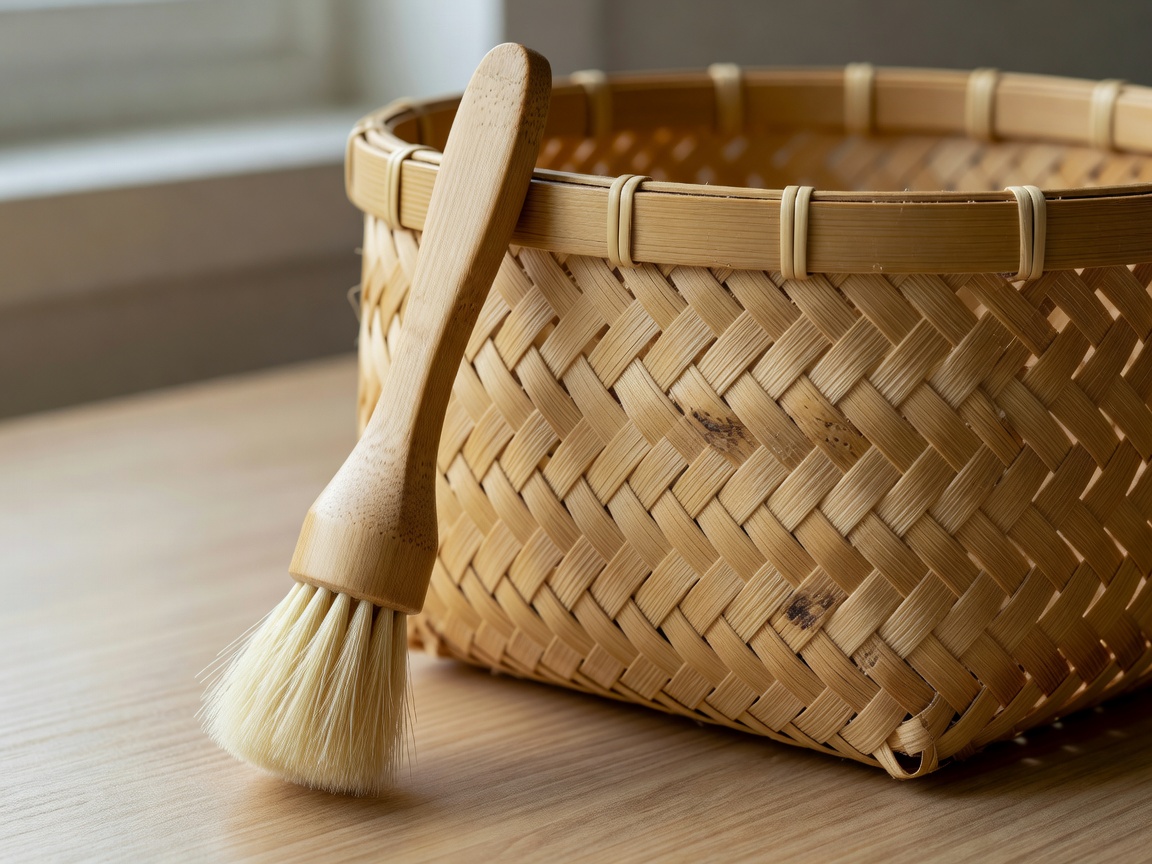
For a sound, undecorated household object, a very soft dry brush may help remove loose surface dust. Work gently and stop if fibers lift, fragments move or a finish appears powdery or unstable. Do not scrub across projecting ends. A clean dry cloth may be useful on a suitable smooth surface, but can snag on open weaves. Test your approach cautiously in an unobtrusive area only when the object is robust enough for routine cleaning.
Water is not the default next step. If the maker permits a lightly damp cloth or rinsing for a particular contemporary utensil, follow those instructions and allow appropriate drying. Do not generalize that permission to old baskets or objects with unidentified finishes. Dishwashers, soaking, steam cleaners, household bleach and aggressive detergents can introduce avoidable risks.
Give moisture a way out
Prolonged dampness can encourage mold, while strong heat can produce uneven drying and stress. Keep objects away from radiators, hot appliances and intense direct sunlight. For a utensil specifically designed for wet use, make sure it can dry with good air circulation before storage. Putting a damp item into a closed cupboard or sealed plastic bag works against that aim.
A flower basket may depend on a separate watertight liner or vessel. Confirm the intended arrangement rather than pouring water into the woven body. If a liner leaks, remove the water source and seek advice appropriate to the object's finish and condition. Do not accelerate drying with a hair dryer. A valuable or historically important object deserves professional guidance rather than an improvised rescue treatment.
- Choose a stable location
Keep the object away from persistent damp, direct heat and frequent knocks.
- Support its natural shape
Avoid heavy contents, tight stacking and pressure on projecting elements.
- Pause when something changes
New powder, odor, staining or loose fibers calls for assessment, not a stronger cleaner.
Oil, color and repair are not simple upgrades
Do not routinely oil bamboo because a general household tip says that natural materials “need feeding.” Oil can darken a surface, trap dirt or interfere with future treatment, and it may not suit the original finish. Equally, dark color does not automatically indicate harmful dirt: it can reflect material choice, treatment, exposure or age. Attempts to restore a uniformly pale appearance may remove meaningful surface information.
Loose strips and broken bindings may tempt a quick application of glue. Household adhesives can stain, set in the wrong position or make later repair harder. Do not pull loose ends back into place by force. For a contemporary working object, ask its maker about repair. For an antique, signed artwork or object of personal importance, consult a conservator experienced with plant materials or woven objects.
Know when ordinary care stops
Active mold, suspected insect activity, crumbling material or significant structural failure falls beyond this guide. Separate the object from other vulnerable items where this can be done safely, avoid spreading dust and seek qualified advice. Do not apply pesticides, solvents or heat treatments based on a website summary. Human health, the object's materials and the surrounding environment all need consideration.
Further guidance
The Canadian Conservation Institute provides preventive conservation resources. Museum guidance is useful context but does not replace an assessment of your object. The American Institute for Conservation offers information on finding conservation expertise.